About
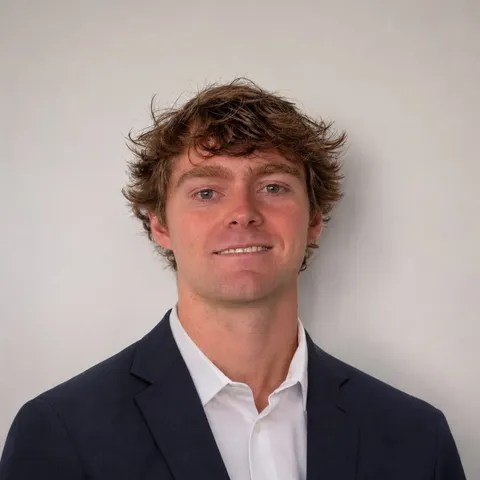
Hello! My name is Lucas Groves. I’m a software engineer with a deep interest in data, machine learning, electronics, and scientific computing, and I studied mathematics at Arizona State University.
I’ve loved computing for as long as I can remember. I started out making Minecraft mods and moved on to more complex projects like Discord bots (which seemed very advanced to fourteen-year-old me). When it came time for university, I chose mathematics. I’ve always wanted to understand the “why” of things, and I believed the best way to do that was from first principles. If you think about it, it’s hard to get more first principles than pure mathematics. My degree let me explore a lot of different directions: physics (materials physics was one of my favorite subjects), electronics (hardware design, logic design, and circuits), and both pure and applied mathematics, from applied computing to the theory of partial differential equations.
After my second year, I joined a small startup called Western Semiconductor, where I got my first real experience shipping code with rigor. I was actually hired from a coffee shop. I walked in straight from my hardware design class, and someone was asking people whether they knew anything about Verilog and C++. My first project drew on my background in mathematics and statistical mechanics, modeling heat diffusion across ten different IC chips, ranging from chips designed for high-frequency trading to chips for autonomous drones. I also led the integration of FinSim, a commercial Verilog simulator from Fintronic, into our in-house EDA software. Simulators like FinSim run a chip’s hardware description so engineers can catch logic bugs before paying to fabricate it, and FinSim comes with FinSimMath, a patented Verilog extension for taking a design from math-level models down to RTL.
After Western Semiconductor I went back to finishing my degree. Near the end of it, I connected with a company called Wise Pelican and started building a model to predict housing prices. While exploring our data, I noticed it was fragmented across several databases, and that was costing the company thousands of dollars. So I proposed and led a full redesign of the infrastructure.
As the first engineer, once the redesign was approved, it was mine to build. I pulled everything out of MongoDB and RDS into a single PostgreSQL database covering every property in the country, and learned more than I ever expected about making a database that size actually behave (partitioning, spatial indexes, and a lot of late nights reading query plans). The old pipeline rebuilt everything from scratch and took most of a working day, so I rewrote it in layers that only process what changed. It went from an overnight job to something that finishes over a coffee break.
Then I made the case for something a little unusual for a startup: getting off the cloud entirely. We were paying a lot every month for capacity we could own outright, so I proposed building our own cluster and then built it, from bare hardware up through virtual machines, distributed storage, and failover so a machine could die without anyone noticing. It brought back everything I loved about electronics and hardware in school. My favorite day at Wise Pelican was the day we finally switched off our cloud instances and moved everything onto our own servers, and it all just worked. After a month of preparation, testing, and very late nights, watching it run cleanly was one of the best feelings I’ve had as an engineer. The hardware paid for itself within a couple of months.
With the data finally in one clean place, I got back to the model I was originally hired to build. I wrote a transformer in PyTorch to score properties, and it outperformed the gradient-boosted model we had been using. I also calibrated it so a score actually meant what it said. The biggest lesson I took from Wise Pelican is that the model was the last ten percent of the work. Everything before it, getting the data right and the infrastructure stable, is what made it possible. It’s the same first-principles instinct that drew me to math: fix the foundation and the rest gets easier.
Today I’m a data engineer at Sprouts Farmers Market, where I was one of the first engineers on the marketing technology side. My work sits behind how Sprouts reaches its customers: the weekly decision engine that chooses which messages and offers each customer receives, the pipelines that measure whether campaigns actually worked, and the audiences behind our ads. Working at a company this size taught me something a startup couldn’t. Other teams depend on your work every single week, so it has to be trustworthy and explainable, not just clever. One of my proudest moments there was replacing our vendor’s campaign measurement with pipelines I built myself. When the approach we had planned fell through right before a deadline, I found another way to deliver and still got the data to our partners on time. I’ve also been building AI agents that let people ask questions about our data in plain English, with guardrails so they never expose information about specific customers.
Outside of work, I build Tributary, a real-time research platform for SEC filings. I started it because I wanted to build something end to end with nobody telling me what it should be. Every new filing streams in within a minute or two of being published. I rewrote the parser in Rust and checked it against my original Python version on every test filing before trusting it. The whole thing runs on a Kubernetes cluster I manage myself at home. On top of it sits an AI analyst that answers questions about companies, and every number it gives is traced back to the exact filing it came from. Tributary is where I learn things I haven’t been paid to do yet, and you can read more about how I built it on my blog.
When I’m not building, you’ll usually find me outdoors. I’ve been skiing since I was two years old, and lately I’ve been hiking a lot. I recently finished every trail in South Mountain Park here in Phoenix, and now I’m working my way through all the trails in the Estrella Mountains. I’m always happy to talk about data, infrastructure, AI, or anything built from first principles, so feel free to reach out.